Office Clearance Accessibility Statement
Accessible Office Clearance Services
Office Clearance Area Accessibility Info
 Our commitment to an accessible office clearance area is rooted in making every stage of office clearing clear, safe and usable. This Accessibility Statement explains how our office clearance services meet accessibility expectations and what we do to support users with diverse needs. We aim to support informed decisions when arranging removal of furniture, equipment and documents, and to make the accessible Office Clearance area welcoming and easy to navigate.
We design our accessible office clearances with WCAG 2.1 AA compliance as a guiding standard. That means attention to semantic structure, sufficient contrast, and content that remains usable when text is resized. Our approach covers digital and physical touchpoints so that both online booking tools and in-person clearance plans respect inclusive design principles.
 To support screen-reader users, the content and interactive elements related to office clearance are structured using clear headings, ARIA roles where appropriate, and meaningful link text. We test for screen-reader compatibility and continually refine labels, alt content and landmark regions. Screen-reader support is central to how we present removal schedules, item lists and safety notes.
We prioritise keyboard navigation so people can complete tasks without a mouse. Our online office clearance booking flows, quote forms and information pages include visible focus indicators, logical tab order and skip-to-main-content links. Users can manage selections, confirm pickup windows and review safety instructions using only the keyboard.
Key accessibility features include:
- WCAG 2.1 AA conformance targets for text spacing, contrast and adaptable layouts.
- Keyboard operability across booking and support tools.
- Clear, consistent headings and semantic HTML to aid navigation for assistive technologies.
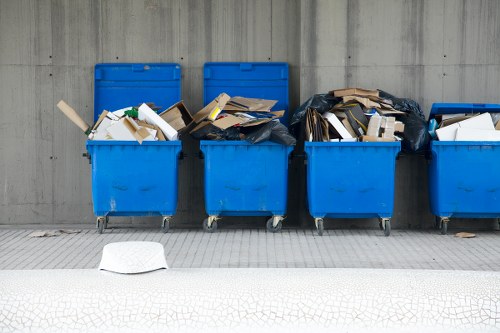 For the physical office clearance process we communicate accessibility needs in advance and adapt routes, packing methods and on-site interactions. Staff are trained to follow instructions and to use alternative formats for instructions and inventories when requested. Our aim is an inclusive clearance that minimises disruption and keeps safety and dignity front of mind.
We also provide practical adjustments for an accessible office clearance area: prioritised access points, reduced-lift strategies, tactile markers for pathways, and clear signage with high contrast. If visual aids are required, we can arrange printed manifests with larger type and simplified layouts. Color contrast and legibility are considered for any printed or projected information related to the clearance.
 We welcome requests for further accessibility accommodations. Please contact our accessibility team using the contact channels available on this site or within your account area to request alternative formats, arrival adjustments or specific assistance during an office move. We do not publish direct contact details in this statement to protect privacy; instead, use the site???s accessibility contact options to make requests.
![In the foreground, a man wearing a safety helmet and a dark uniform stands with his back to the camera, observing a large mound of mixed construction and domestic waste. The waste pile consists of various materials, including broken pieces of white and grey appliances, black plastic fragments, wooden debris, and metal objects, all stacked chaotically on a paved surface. The textures range from smooth appliance surfaces to rough timber and brittle plastics, with some items partially visible and others obscured beneath layers of rubbish. In the background, the waste extends upwards, forming a dense, disorganized heap that dominates the scene, indicating an active waste clearance or disposal site typical of industrial or commercial rubbish management. The environment appears outdoor, with no visible vegetation or structures, suggesting a temporary or designated waste storage area. The lighting is neutral, allowing full visibility of detailed debris, consistent with daylight conditions, and the overall scene emphasizes the importance of professional rubbish removal services such as those offered by Office Clearance in managing large waste accumulations efficiently and safely, even within the vicinity of [POSTCODE], [TOWN].](/pub/_photos/rubbish/f1290969096.jpg) We monitor and update our practices: regular audits, user testing with assistive technology, and staff refresher training keep our office clearances aligned with evolving standards. If you experience barriers in the accessible office clearance area or while using related online tools, tell us the issue and the preferred way we can help. We will respond and take reasonable steps to resolve concerns in a timely way.
We monitor and update our practices: regular audits, user testing with assistive technology, and staff refresher training keep our office clearances aligned with evolving standards. If you experience barriers in the accessible office clearance area or while using related online tools, tell us the issue and the preferred way we can help. We will respond and take reasonable steps to resolve concerns in a timely way.
Thank you for reviewing this statement about our office clearance accessibility. We are committed to ongoing improvement and to delivering an accessible, respectful and efficient clearance experience for everyone. This statement will be reviewed periodically and updated to reflect enhancements in technology and service delivery.