Health and Safety Policy for Office Clearance and Workplace Removal
 Purpose: This health and safety policy sets out the approach, responsibilities and expectations for office clearance, commercial removal and workplace cleanout activities. It is designed to ensure that every staged office clearance project is planned, resourced and executed in a way that protects the health and safety of staff, contractors and site visitors. The policy applies to all stages of an office removal, from initial site assessment to final disposal and site handover, and aims to promote a consistent, risk-aware culture.
Scope and Objectives
This policy covers office removal, office cleanouts, relocation clearance and associated handling of materials in commercial spaces. The objectives are to identify hazards, assess and control risk, ensure competent supervision, and maintain clear communication so that all parties understand and follow safe systems of work. The document supports safe manual handling, safe use of tools and plant, and safe segregation of waste and recyclable items during an office clearance service.To achieve these aims, project leaders will prepare a risk-based Safe Work Plan for each task. Risk assessments must be proportionate to the scale of the clearance. Typical hazard categories include slips, trips and falls, manual handling strain, collapsing stacks of stored items, electrical hazards from powered equipment, and potential exposure to sharps or hazardous materials. Each plan must document control measures and emergency arrangements. 
Responsibilities
Management is responsible for providing resources, defining safe work procedures for the office clearance process, and ensuring staff and contractors are competent. Supervisors must enforce the plan and monitor compliance. All employees and contractors engaged in clearance duties must follow instructions, use controls provided and report hazards and incidents promptly. Personal accountability is essential to reduce risk.Project teams should adopt a hierarchy of controls approach: eliminate hazards where practicable, substitute less hazardous methods, apply engineering and physical controls, use administrative controls including safe systems of work, and provide appropriate personal protective equipment (PPE). A simple checklist of controls helps maintain consistency across multiple office clearance projects:
- Pre-clearance site survey and documented risk assessment
- Designated walkways and exclusion zones during dismantling
- Use of trolleys, lifting aids and mechanical assistance to reduce manual handling
- Appropriate PPE such as gloves, safety footwear and eye protection
- Safe segregation and containment of waste and recyclable materials
These measures help ensure that every office clean-out is delivered with safety and environmental stewardship in mind.
Safe manual handling is a core element of the policy. Teams must plan lifts, adopt correct posture, use mechanical aids where available and limit load weights through task design. Job-specific training and briefings should define the most hazardous tasks and control techniques. For example, dismantling office furniture often demands two-person lifts or powered equipment to prevent injury. Communication is vital: spotters and clear signals reduce the chance of slips or collisions in congested office spaces.
Electrical safety is another critical focus. Only trained personnel should disconnect or handle electrical fittings or office equipment. All powered tools and temporary electrical supplies must be inspected and maintained. Where isolation of circuits is required during an office move or clearance, the plan must ensure systems remain safe and that batteries or live components are managed appropriately.
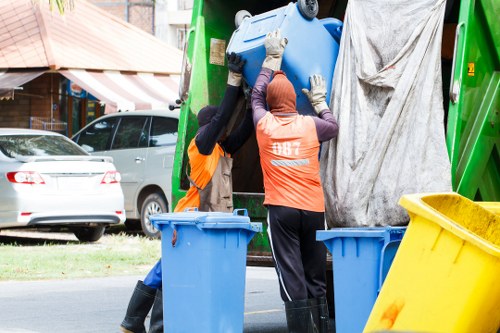
Waste handling must prioritize safe containment, segregation and responsible reuse or recycling. Sharp objects, confidential materials and potentially hazardous substances (such as cleaning chemicals or old batteries) require separate handling and secure containment. Teams must label and segregate waste streams to avoid cross-contamination and to facilitate lawful disposal by specialist contractors when needed. 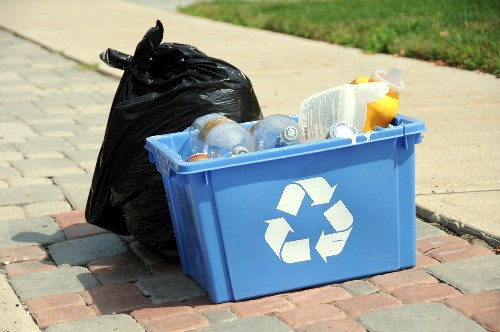
Training and competence are essential. Staff engaged in office clearance should receive induction training on this policy, task-specific training for equipment and manual handling, and regular refreshers. Competence verification can include observed safe work practice, toolbox talks and documented records of training. Supervisors must ensure that temporary or agency workers are briefed on site-specific hazards and controls.
 Incident reporting and investigation procedures will be clear and proportionate. All accidents, near misses and hazardous conditions must be reported without fear of blame. Investigations aim to identify root causes and implement corrective actions to prevent recurrence. Records of incidents and corrective actions will be retained to inform continual improvement of office clearance methods.
![A cluttered garage space filled with various stored items, including multiple plastic storage boxes stacked on metal shelving units, some with transparent lids revealing contents such as tools, household items, and sports equipment. To the left, a yellow mop bucket with a wringer and cleaning tools, alongside a small wooden ladder leaning against the shelves. In the middle, several large terracotta plant pots are placed on the concrete floor, accompanied by brooms, mops, and dustpans. On the right side, a grey hand truck is positioned next to a black suitcase and plastic containers with lids. The background features crowded shelving with assorted boxes, bags, and equipment, creating a scene typical of a domestic or small commercial storage area needing rubbish clearance, possibly by a professional waste management company like Office Clearance operating in the UK, near the postcode area of [POSTCODE] in a town consistent with the context of their rubbish removal services.](/pub/_photos/rubbish/f1482473472.jpg) Emergency arrangements must be communicated to the team and displayed on-site. Evacuation routes, assembly points and first aid provisions should be reviewed during planning. Where works are staged across multiple floors or areas, teams should agree staging and egress plans to ensure that building occupants and clearance personnel can evacuate quickly if required.
Emergency arrangements must be communicated to the team and displayed on-site. Evacuation routes, assembly points and first aid provisions should be reviewed during planning. Where works are staged across multiple floors or areas, teams should agree staging and egress plans to ensure that building occupants and clearance personnel can evacuate quickly if required.
Monitoring and review: The effectiveness of this health and safety policy for office clearance will be monitored through site inspections, audits and review of incident trends. Learnings from completed projects will be incorporated into future risk assessments. Management will review the policy periodically and after significant incidents to ensure relevance and continual improvement.
By applying these principles???robust planning, clear responsibilities, competent people and appropriate controls???office removal and commercial clearance activities can be delivered safely, efficiently and sustainably. Every participant must contribute to a culture where safety is a shared priority and where safe behaviours are reinforced.
Commitment: The organization commits to provide the resources and leadership necessary to deliver safe office clearance operations. Compliance with this policy is mandatory for all personnel and contractors engaged in office move, office cleanout or commercial clearance tasks.