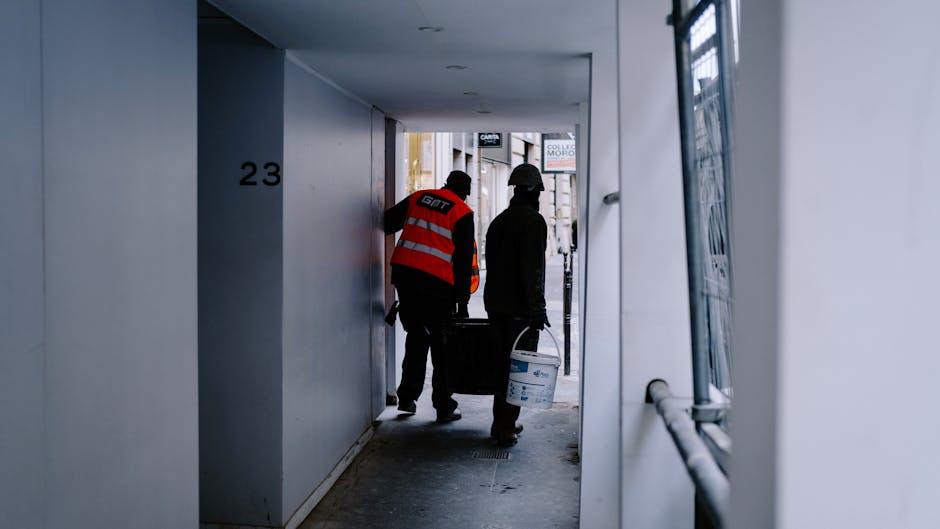
DIY clearance vs hiring pros: costs, time and safety
If you are staring at a room full of desks, boxes, old chairs, or the remains of a long-overdue office clear-out, the question tends to arrive quickly: should you do it yourself, or bring in professionals? The answer is rarely just about price. DIY clearance vs hiring pros: costs, time and safety is really a decision about effort, risk, disposal logistics, and how much disruption you can realistically handle.
To be fair, there are situations where a DIY approach makes perfect sense. There are also times when hiring a crew saves money in ways that do not show up on the first quote. A van hire looks cheap until you factor in loading time, multiple trips, sorting recyclables, and the inevitable moment one heavy item turns out to be heavier than you remembered. This guide breaks down the trade-offs in plain English, with practical examples, comparison points, and a few hard-won lessons that can save you time and stress.
By the end, you should have a much clearer view of which route suits your job, your schedule, and your safety. And if you are weighing up a commercial clearance or a more complex office job, you will also know what to ask before you commit.
Table of Contents
- Why DIY clearance vs hiring pros: costs, time and safety Matters
- How DIY clearance vs hiring pros: costs, time and safety Works
- Key Benefits and Practical Advantages
- Who This Is For and When It Makes Sense
- Step-by-Step Guidance
- Expert Tips for Better Results
- Common Mistakes to Avoid
- Tools, Resources and Recommendations
- Law, Compliance, Standards, or Best Practice
- Options, Methods, or Comparison Table
- Case Study or Real-World Example
- Practical Checklist
- Conclusion
- Frequently Asked Questions
Why DIY clearance vs hiring pros: costs, time and safety Matters
Clearance work looks simple from the doorway. Then you start moving things and the whole job changes shape. A few filing cabinets become a planning problem. An old copier becomes a lifting problem. Loose cables, broken plastic, sharp metal edges, and awkward stairwells turn a tidy clear-out into something you need to think through properly.
That is why the choice between DIY clearance and hiring pros matters. It affects three things at once:
- Costs - not just the obvious spend, but hidden costs such as vehicle hire, fuel, parking, bags, labour, and disposal charges.
- Time - your own time, the time of staff helping you, and any downtime caused by a room or office being out of use.
- Safety - manual handling, trips and falls, broken items, contamination, and the risk of disposing of items incorrectly.
A lot of people begin with the assumption that DIY is the cheapest route. Sometimes it is. But if you need several trips to the tip, have to sort mixed waste, or discover that an item needs careful handling, the maths changes quickly. Professional help can look pricier at the start and still turn out better value overall because the job is completed faster, with less disruption and fewer headaches.
There is also a trust element that people sometimes overlook. A clearance provider should be able to explain how they handle waste, what their process is, and how they approach safety and recycling. If you are comparing providers, pages such as pricing and quotes and insurance and safety give a useful sense of what good service should cover.
How DIY clearance vs hiring pros: costs, time and safety Works
The two approaches are built on very different workflows. Understanding those workflows is the quickest way to judge what fits your situation.
DIY clearance in practice
DIY clearance means you handle the whole job yourself, or with staff, family, or friends. That usually involves sorting items, packing or bagging, lifting and loading, transport, and disposal at an appropriate site or collection point. You may also need to separate recycling streams, protect floors or walls, and arrange tools and protective gear.
It sounds straightforward until you realise how many micro-steps are hiding in the process. A drawer unit needs emptying before lifting. A computer area needs cables identified. Confidential papers need secure handling. Heavy items need two-person lifts or a trolley. Small details, yes. But they stack up.
Hiring professionals in practice
Hiring pros shifts most of that burden to a trained team. In a well-run clearance, the provider typically assesses the job, gives a quote, arranges timing, brings the right vehicle and equipment, and removes items in one organised visit. That can be a big advantage if you are clearing a busy office, a room with limited access, or a property where time is tight.
Professional clearance is also easier to plan around. If you are in a London area such as Northolt, North Woolwich, North Sheen, North Ockendon, or Northumberland Heath, local access, parking, and timing can influence the smoothness of the job more than people expect. A good provider will factor that in early rather than leaving you to juggle it on the day.
How cost, time, and safety interact
These three factors do not sit separately. They push and pull on one another.
- If you save money by doing it yourself, you may spend more time and take more physical risk.
- If you save time by hiring professionals, you may reduce disruption and avoid hidden expenses.
- If you prioritise safety, you may need specialist help for heavy, awkward, or sensitive items.
That is the real decision point. Not "what is cheapest?" but "what is cheapest once time and risk are included?"
Key Benefits and Practical Advantages
Both options have their place. The best choice depends on the scale and complexity of the job, but there are clear advantages on each side.
Benefits of DIY clearance
- Lower upfront spend if the job is small and you already have transport.
- Full control over what stays, what goes, and how items are sorted.
- Flexible timing if you can work over several evenings or a weekend.
- Direct oversight for documents, valuables, or items you want to inspect personally.
Benefits of hiring professionals
- Faster completion for larger or more complicated clearances.
- Less physical strain because trained teams handle lifting and removal.
- Better handling of awkward items such as bulky furniture, electronics, or mixed waste.
- Cleaner process with less disruption to staff, neighbours, or building users.
- Support with disposal and recycling through an organised clearance route.
A practical advantage that rarely gets enough attention: professional clearance often reduces decision fatigue. If you have ever stood in front of a pile of old office kit at 7:30 in the evening, tea gone cold, wondering whether that printer is worth another round of cables and storage, you will know the feeling. Sometimes a tidy, done-for-you process is worth a lot.
Who This Is For and When It Makes Sense
This decision is not one-size-fits-all. Different situations call for different levels of help.
DIY makes more sense when:
- The clearance is small and low risk.
- The items are light, easy to carry, and simple to sort.
- You have a vehicle, enough hands, and spare time.
- You are clearing personal belongings rather than business equipment.
- You are not under pressure to finish by a fixed date.
Hiring pros makes more sense when:
- The clearance involves bulky furniture, multiple rooms, or a full office.
- There are stairs, tight corridors, lift restrictions, or difficult access.
- You need the job done quickly or outside core working hours.
- There are items that need careful handling, such as IT equipment or confidential material.
- You want to reduce injury risk and avoid multiple disposal runs.
For many businesses, the middle ground is the most sensible. You handle light sorting in-house, then bring in professionals for the heavy lifting and transport. That can be a neat compromise, especially when downtime is expensive. It is not glamorous, but it works.
If you are comparing service levels and want a clearer view of process and protection, the guidance on health and safety policy can help set expectations around what responsible clearance work should look like.
Step-by-Step Guidance
If you want to decide well, do not start with cost alone. Start with the job itself.
- Walk the space
Look at what needs moving, how heavy it is, whether anything is fragile, and whether there are access issues. A quick visual check can change your estimate straight away.
- Separate item types
Put furniture, electrical items, paperwork, recyclable materials, and general waste into rough groups. This makes the next steps easier and often reduces cost either way.
- Estimate labour honestly
Ask yourself how many people you need, whether anyone will struggle with lifting, and how long you can actually spare. Be a bit ruthless here. The first estimate is usually too optimistic.
- Compare total costs
Add vehicle hire, fuel, bags, gloves, parking, disposal fees, and your own time if you want a real picture. A quote from a professional provider may look more competitive once those bits are included.
- Check safety risks
If there are sharp edges, heavy cabinets, broken glass, or awkward loads, do not gloss over that. Safety issues are where DIY clearance can go sideways fast.
- Decide on the route
If the job is simple, small, and low risk, DIY may be fine. If not, get a quote and compare properly. No drama. Just practical judgement.
- Plan the disposal route
Know where items will go, how they will be separated, and what must be kept secure. For commercial clearances, ask how the provider handles sorting and recovery.
- Set a finish line
Pick a realistic date and do not drift. An unfinished clearance has a way of spreading into the rest of the week. Annoying, but true.
Expert Tips for Better Results
These are the small things that make a clearance smoother than average.
- Use a pre-sort system before anyone starts lifting. Even a few labelled piles can save ages.
- Measure doorways and stairs for large items. Sounds obvious, yet this is where people get caught out.
- Take photos of awkward rooms if you are requesting a quote. It helps with accuracy.
- Protect floors and walls where items will be carried out. One scuffed corner can sour an otherwise good day.
- Keep a box for cables and fixings. Loose screws, chargers, and leads have a habit of disappearing when you need them.
- Do not overload bags or bins. A lighter load is slower to move? Sometimes, yes. But it is usually safer and less messy.
- Ask about recycling and reuse if sustainability matters to your organisation. The page on recycling and sustainability is a useful reference point for the kind of thinking a good provider should bring.
One more practical tip: if you are clearing an office and have only one or two awkward heavy items, it may still be worth hiring pros just for that part. People sometimes imagine it has to be all DIY or all outsourced. It doesn't. Mixed approaches are often the smartest.
Common Mistakes to Avoid
A lot of clearance pain comes from predictable mistakes. The good news is they are easy to avoid once you know the pattern.
- Underestimating weight and bulk - old desks and cabinets are often heavier than they look.
- Forgetting access restrictions - parking, loading bays, lifts, and time windows matter more than people expect.
- Ignoring disposal costs - a cheap start can turn expensive fast if trips multiply.
- Mixing items that should stay separate - this makes recycling harder and can create avoidable risk.
- Skipping protective equipment - gloves, sturdy shoes, and sensible lifting technique are not optional extras.
- Leaving data-bearing items unsecured - confidential paperwork and old devices need a proper plan.
- Assuming every provider is the same - check what is included, what is not, and how complaints are handled if something goes wrong.
It is also worth checking how payments are processed and what protections are in place, especially for larger jobs. The payment and security page is useful for understanding what a professional setup should make clear up front.
Tools, Resources and Recommendations
For a DIY clearance, the right tools can make the difference between a decent afternoon and a miserable one.
Useful DIY tools
- Sturdy gloves
- Tough bags or boxes
- Trolley or sack truck
- Ratchet straps for secure loads
- Protective floor covers or blankets
- Labels, marker pens, and tape
- Basic cleaning supplies for the final pass
Useful planning resources
- A simple room-by-room list
- A rough inventory of bulky items
- A decision sheet for keep, donate, recycle, dispose
- Access notes for stairs, lifts, parking, and loading
- Contact details for the person managing the site on the day
If you are comparing professional help, use a provider that is transparent about service scope, quote structure, and handling expectations. You can start with pricing and quotes and then check insurance and safety before you commit. Those pages help you ask better questions, which is half the battle.
And yes, small job or big job, a torch can be surprisingly handy. There is always one corner, behind one cabinet, where the dust and forgotten cables are hiding. Always.
Law, Compliance, Standards, or Best Practice
Clearance work often touches on responsibilities that are easy to overlook. You do not need to become a compliance expert, but you do need to understand the basics.
For businesses, best practice usually means treating clearance as more than simple waste removal. Items may include confidential material, electrical equipment, reusable furniture, or materials that need separating for recycling. That is why it helps to ask how a provider approaches sorting, handling, and documentation where needed.
Health and safety is the other big one. Manual handling injuries are one of the most common ways a simple clear-out becomes a problem. Good practice means planning the lift, using the right equipment, not overloading, and not asking people to shift items they clearly should not be moving. If in doubt, stop and reassess. The broken-back hero moment is not worth it.
Businesses should also think about due diligence. Who is handling the waste? How are items being transported? What happens if something is damaged? A provider with clear policies, such as the ones linked to modern slavery statement and complaints procedure, signals a more considered operation. That does not answer every question, but it does tell you the business takes accountability seriously.
Finally, if accessibility is a factor for staff, visitors, or building users during a clearance, planning matters even more. A route that works for one person may not work for another. That is where careful scheduling and clear communication make a real difference.
Options, Methods, or Comparison Table
Here is a straightforward comparison to help you weigh up the decision without overcomplicating it.
| Factor | DIY clearance | Hiring professionals |
|---|---|---|
| Upfront cost | Usually lower at first glance | Usually higher upfront, but often more inclusive |
| Time required | Can take several hours or multiple days | Usually much faster, often completed in one visit |
| Physical effort | High, especially for bulky items | Low for the customer; the crew handles lifting |
| Safety risk | Higher if items are heavy, sharp, or awkward | Lower when the team is trained and equipped |
| Transport | You arrange vehicle, fuel, parking, and loading | Typically included in the service |
| Disruption | Can spread across the day or week | More contained and easier to plan around |
| Best for | Small, simple, low-risk clearances | Large, urgent, or complex clearances |
The table is useful, but the real takeaway is this: if the clearance is simple, DIY can be perfectly sensible. If it starts to involve stress, strain, or several moving parts, professional help usually earns its keep.
Case Study or Real-World Example
Imagine a small office in Northolt clearing out two storage rooms after a team restructure. The rooms contain mixed items: old chairs, a few desks, archive boxes, broken shelving, and several small electrical items. At first glance, someone suggests a DIY weekend job. There is a van available, a few staff can help, and it looks manageable.
Once they do a proper walkthrough, the picture changes. One room has a narrow entrance. The shelving is awkwardly fixed. The archive boxes need sorting because some contain old records that should not be left exposed. The team would need to do at least two vehicle runs, and the office manager realises the building has limited loading times on a Monday morning. Suddenly, the "cheap" option is looking a bit more expensive in time and hassle.
They compare that against a professional quote. The quote includes loading, removal, and organised disposal. The team only needs to pre-sort a few sensitive items and clear access. In the end, the professional route costs more on paper, but the office avoids lost staff time, awkward lifting, and a weekend spent wrestling with desks. Honestly, that is often how these decisions play out.
In another case, a single room in a home office setup with a couple of light units and a few bags of paper might be perfect for DIY. No drama, no major risk, no problem. The point is not that one option is always best. It is that the job size and risk level should decide.
Practical Checklist
Use this checklist before you choose DIY or hire pros.
- Have I identified everything that needs removing?
- Are there heavy, sharp, fragile, or awkward items?
- Do I have enough people to do this safely?
- Do I have the right vehicle or transport plan?
- Are there stairs, lifts, parking limits, or tight access points?
- Do any items need confidential handling or special care?
- Have I compared the real total cost, not just the headline figure?
- Is there a deadline that makes speed important?
- Do I understand how waste and recycling will be handled?
- Would a professional service reduce risk or disruption enough to justify the spend?
If you answer "no" to several of those, the DIY route may be false economy. A quick quote can settle the question more neatly than a whole day of guesswork.
Conclusion
DIY clearance vs hiring pros: costs, time and safety is not really a contest with one universal winner. It is a decision about what matters most for your specific job. DIY can be smart for smaller, lower-risk clearances where you have time, transport, and enough hands. Hiring professionals makes more sense when the job is large, awkward, time-sensitive, or physically demanding.
The best decisions tend to be the boring ones, truth be told. Assess the space, count the real costs, think about safety, and choose the path that reduces stress rather than simply the one that looks cheapest at first glance. That is how you keep the job tidy, the timeline realistic, and the day far less chaotic than it might otherwise become.
If you are ready to take the next step, compare your options carefully and choose the route that gives you the best balance of value, speed, and peace of mind.
Get a free quote today and see how much you can save.
Frequently Asked Questions
Is DIY clearance always cheaper than hiring professionals?
Not always. DIY can have a lower upfront spend, but once you include vehicle hire, fuel, parking, waste disposal, bags, protective equipment, and your own time, the total can rise quickly. For larger jobs, professional clearance may actually be better value.
How do I know if my clearance is too big for DIY?
If you have bulky furniture, stairs, difficult access, multiple rooms, or a tight deadline, the job is probably moving beyond simple DIY. If you are already worried about lifting or transport, that is a strong sign to get help.
What are the biggest safety risks with DIY clearance?
Manual handling injuries, trips and falls, sharp edges, broken glass, and overloading are the main ones. If you are dealing with heavy or awkward items, the risk rises fast, especially without the right equipment or enough people.
Do professionals save time even for smaller jobs?
Sometimes, yes. Even a smaller clearance can take longer than expected once sorting, loading, and disposal are included. A professional team can often complete the work in one visit, which may be worth it if your schedule is tight.
Can I mix DIY sorting with professional removal?
Absolutely. That is often a very sensible approach. You can sort items into keep, recycle, and dispose categories yourself, then bring in professionals for the lifting and transport. It is a neat middle ground.
What should I ask for in a clearance quote?
Ask what is included, how access issues are handled, whether loading and disposal are covered, how payment works, and whether the provider can deal with recycling or special items. Clear answers upfront usually prevent awkward surprises later.
How can I reduce the cost of a professional clearance?
Pre-sort items, clear access routes, take photos for quoting, and remove personal or sensitive items in advance. The better prepared the site is, the smoother the job tends to be.
What if my clearance includes old electronics or paperwork?
Those items need careful handling. Electronics may need separate treatment, and paperwork with personal or business information should be secured before removal. Do not just bin everything together and hope for the best.
How do I choose a trustworthy clearance provider?
Look for clear pricing, transparent policies, sensible communication, and a professional approach to safety and disposal. It also helps when a provider is open about processes such as insurance and complaints handling.
Is professional clearance better for office moves?
Often, yes. Office moves usually involve bulky furniture, multiple item types, time pressure, and access constraints. A professional team can reduce disruption and keep the move moving, which is usually the whole point.
What is the safest way to move heavy items during DIY clearance?
Use two people where needed, keep loads light, plan the route first, wear proper footwear, and use a trolley or sack truck for awkward items. If something feels unsafe, stop and reassess rather than forcing it.
Does recycling matter when choosing between DIY and pros?
Yes, especially for mixed office waste. Professional clearance can make sorting and recycling easier, while DIY relies on you to separate materials and dispose of them correctly. If sustainability matters to your business, that is worth factoring in early.